January 2011 - Beginning of my Ph.D.
"The concrete is an homogeneous material"
(at that time I was defining my-self as a structural engineer)
Augustus 2014 - Almost the end of my Ph.D
"The concrete material presents an high heterogeneity"
(now I don't have any clue of how I am, but just of what I know)
Same person, different mind.

Friday, 1 August 2014


Tuesday, 10 June 2014
IF MULTISCALE --> THEN MULTIDISCIPLINARY?
It's almost two years that I decide how to model the phenomenon of ASR in concrete structures. My choice is a multiscale material model based on poromechanics theory developed by Coussy, Dormieux, Ulm and further applied by Lemarchand and Charpin.
I like a lot this approach because you can bridge scales, the equations can be solved analytically and it proved to describe properly the mechanical behavior of concrete.
But today while reading the book titled "Mechanics and Physics of Porous Solid", I was asking to myself if it is indeed necessary to have a multidisciplinary approach to model this problem.
Can ASR in concrete be explained considering only mechanics? or do we need physics and chemistry too?
I don't have any answer at the moment, if you find one just let me know :)
Apparently, by crossing multiple scales you need to learn multiple disciplines!
 |
| Modeling ASR in concrete structures, it looks like finishing a puzzle. (picture from biotuesdays.com) |
Monday, 14 April 2014
PhD Life: Formulating ASR Expansion
I came across this fun application on the web. And put our research topic to test..

So it was not that complicated after all...
Wednesday, 2 April 2014
ASR as hot topic at EURO-C Conference
The PAT-ASR team attended the last International Conference on Computational Modelling of Concrete and Concrete Structures, better know as EURO-C (http://euro-c.tuwien.ac.at/).
Intense and lively discussions were provoked by our presentation, as a results ASR was a "hot topic" of the conference.
Luckily we had the time to explore also the amazing conference venue: St Anton am Albereg (Austria) and enjoying the sun with many friends!
We also want to send our best wishes to Prof. Jan Rots, who is now an organizing member of this conference!
Intense and lively discussions were provoked by our presentation, as a results ASR was a "hot topic" of the conference.
Luckily we had the time to explore also the amazing conference venue: St Anton am Albereg (Austria) and enjoying the sun with many friends!
We also want to send our best wishes to Prof. Jan Rots, who is now an organizing member of this conference!
 |
| The proceedings. |
 |
| The venue: St. Anton am Albreg, Austria. |
 |
| Prof. Jan Rots appointed as organizing member of EURO-C conference by Prof. Gunther Meschke. |
Tuesday, 11 March 2014
Computational Modelling of ASR Workshop
PAT-ASR team will present their work in a workshop on 9th April, 2014. This workshop is organised by Ruhr University. You can find more information about this workshop here.
We hope there will be some productive and informative discussions ahead of us. Hope to see you there.

We hope there will be some productive and informative discussions ahead of us. Hope to see you there.

Wednesday, 11 December 2013
Modelling efforts and control over realistic data
I have been recently busy with trying to improve damage model by implementing better ways to represent variety in material definitions. After finishing the analysis of NanoIndent results now we have the opportunity to assign this information (basically E-modulus and Strength values driven from hardness) for different phases in the system.
I recently introduced


I recently introduced
- Random distribution based on Nano Indent test results - using mean and variance of data
- Triangular random generation of mesh with around 112000 elements to represent 10cm x 10cm sections
- Probabilistic distribution of reaction (in this case expansion) based on petrographic identification of reactive phases in aggregates (different for each mix design)
- and implementation of saturated cracks by updating the loading system while simulation is running (by introducing plastic behavior stage non elements stress strain curves)
Here are some representative images;

Histogram showing distribution of E values grouped by phases (Agg-Mortar-Bond-Void)

Heat map of E Mod values based on Digital image, Mesh geometry representing heterogeneity in aggregates and mortar

Initial Load elements with varied Intensities

Fracture evolution after 20000 simulation steps
Tuesday, 26 November 2013

Tuesday, 12 November 2013
Proof loading on the viaduct Vlijmen-Oost affected by Alkali-Silica Reaction
The viaduct Vlijmen-Oost, affected by Alkali-Silica Reaction, was proof loaded on 6 November 2013.
This tested was performed in order to asses the structural response of the bridge and the its current capacity.
The viaduct was already monitored from several years in the contest of the A59 project. The development of ASR was assessed in 1997, however the bridge expansion appear to be still limited.
This project was conducted by Rijkswaterstraat in collaboration with 3 IS2C project (PAT-ASR, Smart Proof Loading and InfraWatch).
This tested was performed in order to asses the structural response of the bridge and the its current capacity.
The viaduct was already monitored from several years in the contest of the A59 project. The development of ASR was assessed in 1997, however the bridge expansion appear to be still limited.
This project was conducted by Rijkswaterstraat in collaboration with 3 IS2C project (PAT-ASR, Smart Proof Loading and InfraWatch).
 |
| Article in the local news paper. |
 |
| The BELFA truck used to perform the proof loading. |
 |
| Part of the team (from left to right): Rita Esposito (TUDelft), Max Hendriks (TUDelft), Johan De Boon (TUDelft), Sonja Fennis (TUDelft) and Ane de Boer (Rijkwaterstrat). |
Monday, 16 September 2013
Structural Synergy 2013
Pat-Asr teammate Rita Esposito gave a pitch talk on Structural Synergy Symposium in TU Delft, 12th Sep.

 Thank you Rita,


Thursday, 25 July 2013
Textbook AAR Damage in concrete samples
We are currently carrying out numerous Damage Rating index analysis on RILEM test (AAR-4.1 and AAR-3) samples. Along the process of images we frequently come along with text-book examples of ASR damage in our Lab samples. Here is one under UV light.

Sample info:
Prism from RILEM AAR-3 Test on Norwegian Aggregates (Original Mix)
Age 364 days old @ 38°C RH 100%. No Alkali boosting.
Editor's Note: It's weird how we (ASR researchers) enjoy cracks (evidences) in our samples, while it is absolutely bad news for structures and clients.

Sample info:
Prism from RILEM AAR-3 Test on Norwegian Aggregates (Original Mix)
Age 364 days old @ 38°C RH 100%. No Alkali boosting.
Editor's Note: It's weird how we (ASR researchers) enjoy cracks (evidences) in our samples, while it is absolutely bad news for structures and clients.
Looking through the glass
Henry Baker, Chapter 15,"Cautions in viewing Objects" of The Microscope Made Easy, 1742 :

" Beware of determining and declaring your opinion suddenly on any object; for imagination often gets the start of judgment, and makes people believe they see things, which better observations will convince them could not possibly be seen; therefore assert nothing till after repeated experiments and examinations in all lights and in all positions.
When you employ the microscope, shake off all prejudice, nor harbor any favorite opinions; for, if you do, ‘tis not unlikely fancy will betray you into error, and make you see what you wish to see.
Remember that truth alone is the matter that you are in search after; and if you have been mistaken, let not vanity seduce you to persist in your mistake.
Pass no judgment upon things over-extended by force, or contracted by dryness, or in any manner out of their natural state, without making suitable allowances.
There is no advantage in examining any object with a greater magnifier than what shows the same distinctly..."
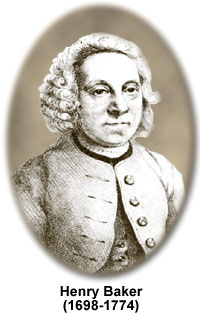
" Beware of determining and declaring your opinion suddenly on any object; for imagination often gets the start of judgment, and makes people believe they see things, which better observations will convince them could not possibly be seen; therefore assert nothing till after repeated experiments and examinations in all lights and in all positions.
When you employ the microscope, shake off all prejudice, nor harbor any favorite opinions; for, if you do, ‘tis not unlikely fancy will betray you into error, and make you see what you wish to see.
Remember that truth alone is the matter that you are in search after; and if you have been mistaken, let not vanity seduce you to persist in your mistake.
Pass no judgment upon things over-extended by force, or contracted by dryness, or in any manner out of their natural state, without making suitable allowances.
There is no advantage in examining any object with a greater magnifier than what shows the same distinctly..."
Friday, 19 July 2013
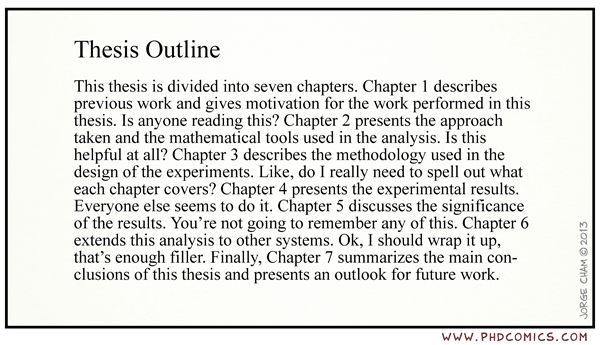
Wednesday, 10 July 2013
Workshop in Paris
This week I participated to the workshop "Strains Induced by Phase Changes in Deformable Porous Solids: What about Building Materials?" which has been held in Paris at Encole des Ponts ParisTech.
It was a really interesting workshop, but I felt a bit out of the contest. However I realized (one more time) that the point of view matter a lot, and your background even more.
As I always say, different points of view produce different results even if you are looking to the same thing; this is the humanity's variety. In any case you learn a lot.
It was a really interesting workshop, but I felt a bit out of the contest. However I realized (one more time) that the point of view matter a lot, and your background even more.
As I always say, different points of view produce different results even if you are looking to the same thing; this is the humanity's variety. In any case you learn a lot.
 |
| Points of view (from SOTI - Something of that Ilk) |
 |
| The poster presented at the workshop. |
Wednesday, 12 June 2013
CFRAC 2013 Conference
Last week part of PAT-ASR team participated at Third International Conference on Computational Modeling of Fracture and Failure of Materials and Structures (CFRAC 2013) held in Prague at Czech Technical University. Rita presented her Multiscale Material Model Approach for ASR-affected Concrete Structures.
 |
| Participants of CFRAC 2013 |
Tuesday, 16 April 2013
IS2C Annual Workshop
Last week the IS2C Annual Workshop took place in Vught and we were (of course) there!
During the 2-days meeting we went also to visit two bridges (on the highway A59) affected by ASR.
Here some picture of the technical visit. More information about all the projects can be found at http://is2c.nl/.


During the 2-days meeting we went also to visit two bridges (on the highway A59) affected by ASR.
Here some picture of the technical visit. More information about all the projects can be found at http://is2c.nl/.
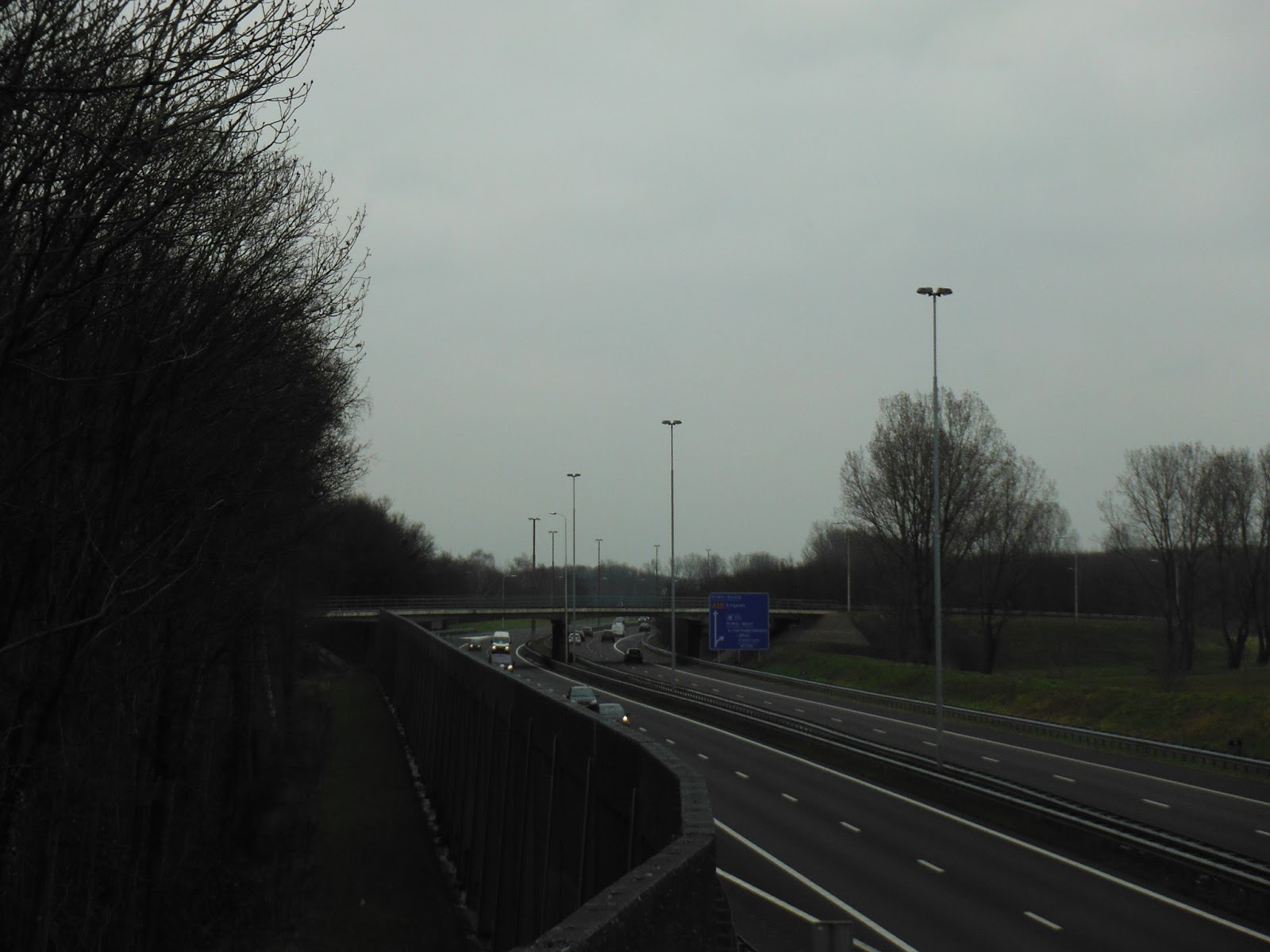
Vlijmen - Oost bridge.

Heidijk bridge..

Map cracking and calcium leaking.

Cracking over the concrete repair material.

The IS2C team.
Friday, 5 April 2013
CT-Scan of ASR reacted samples
Today I have been busy with a trial CT-scan of RILEM AAR-4 samples. The Main aim was to get a 3-dimensional view on how cracks were distributed in concrete medium. Following 3 videos show Top, Front and side view respectively. While progressing through the sample, we can see how cracks are located and progressed.
Current sample size is 15mm x 15mm x 7 mm, resolution of images are around 13 microns\pixel. Largest observed crack width is roughly 80 microns.
Current sample size is 15mm x 15mm x 7 mm, resolution of images are around 13 microns\pixel. Largest observed crack width is roughly 80 microns.
Wednesday, 27 March 2013
PhD tools: Google Scholar
As PhD candidates internet access to Journals is vital for broadening our knowledge on the topic. Personally, my first choice has always been GoogleScholar tool. Depending on your network settings search results proves to be the best and fastest -including direct links to full documents-.
One of many useful options is "Cite" option on search results page.

You can easily export citations for most common software. Whether you use Endnotes, Jabref, Papers or any other citation program, this website provides immense help for a researcher. For more export options click here.
Let's add some humor to it.

One of many useful options is "Cite" option on search results page.

You can easily export citations for most common software. Whether you use Endnotes, Jabref, Papers or any other citation program, this website provides immense help for a researcher. For more export options click here.
Let's add some humor to it.
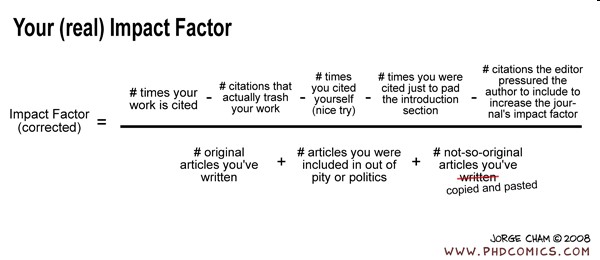
Monday, 18 March 2013
Gefeliciteerd Erik

Happy birthday to Prof. Erik Schlangen... As (rest of) PAT-ASR team we hope the best for you..
Thursday, 14 March 2013
Happiest moment for the last 10 days

Since last week Monday, I have been busy with Triangulation of meshes in Lattice model. Thanks to help from Branko & Mladena, I have come long way. Trick is, you need to calibrate your mesh element radius to have a representable mesh (I know it sounds geek and boring- that's life of PhD). That requires running an Uni axial tensile test on your mesh and check whether calculated E modulus is same as your initial assumption. As all programming goes, have been struggling to pass 1st simulation step (so the solver writes the output file). Finally, after miserable frustrating days, program passed the first step and gave results.
Now I need to calibrate 10 more meshes with various randomness.
A day in life of a PhD
Friday, 15 February 2013
Life Lesson from Giorgia
"The specialization level of a researcher should be positively correlated with his self-irony."
This is the life lesson that today our colleague Giorgia Giardina gave us!
Many congratulations for your PhD's defence!
Subscribe to:
Posts (Atom)